Common Fence Problems Boise Homeowners Face
Wood fences provide privacy, security, and curb appeal, but Boise's wind, moisture, and seasonal temperature changes can take a toll over time. Leaning fence posts, sagging gates, broken pickets, and loose fence panels are some of the most common problems homeowners face. Recognizing these issues early can help you make repairs before they become larger, more expensive projects.
Broken or Missing Fence Boards
Wind, impact damage, aging wood, and everyday wear can cause fence boards to crack, split, or fall off. Missing or damaged boards reduce privacy and allow additional stress on surrounding sections of the fence. Replacing damaged boards early helps maintain both the appearance and structural integrity of your fence.
Leaning or Unstable Fence Panels
A fence that leans or feels unstable is often a sign of shifting soil, moisture damage, or weakened posts. In Boise, freeze–thaw cycles and seasonal ground movement can slowly push fence posts out of alignment.
Early signs of a leaning fence include:
- Panels tilting to one side
- Posts that move when pushed
- Gaps forming beneath fence sections
Addressing these issues early can often stabilize the fence before surrounding sections are affected.
Storm Damage and High Winds
Strong winds can loosen fence posts, break pickets, damage gates, or cause entire sections of fencing to lean. After a windstorm, inspect your fence for movement, loose hardware, cracked boards, and leaning posts so repairs can be made before additional damage occurs.
Fence Damage From Vehicles or Fallen Debris
Fence damage doesn’t always happen gradually. Minor vehicle impacts, fallen tree limbs, or heavy debris can crack boards, loosen posts, or knock panels out of place.
While some damage may appear cosmetic, broken boards or compromised posts can weaken nearby sections over time. Prompt repairs help prevent the damage from spreading.
Sagging Gates or Gates That Won’t Close Properly
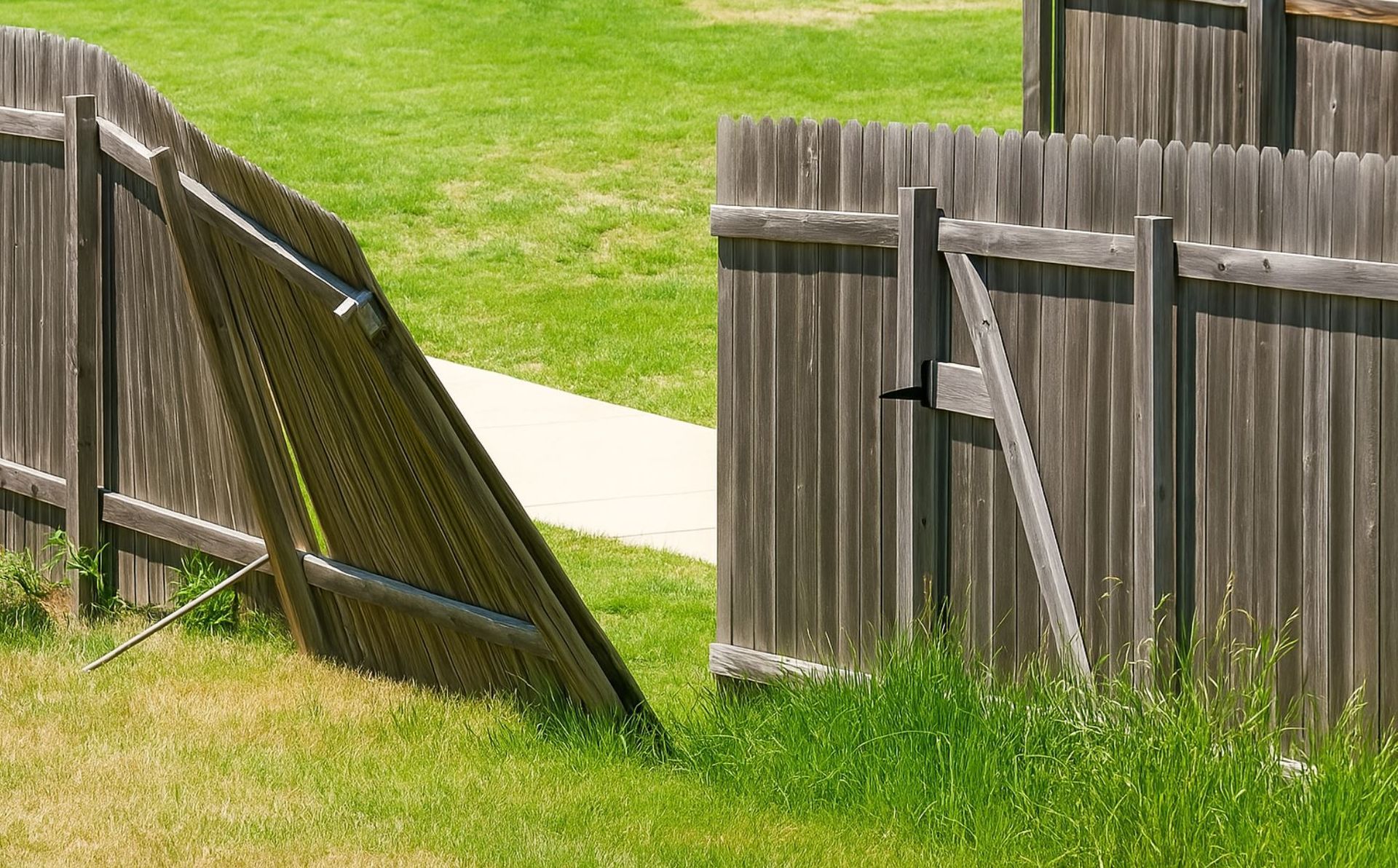
Fence gates experience frequent use, which makes them one of the most common problem areas. Loose hinges, worn hardware, or shifting posts can cause gates to sag, drag, or fail to latch securely.
Common warning signs include:
- Gates that won’t stay closed
- Hinges pulling away from posts
- Latches that no longer align
- dragging on the ground
- won't latch
- warped gate
- swollen wood
In many cases, adjusting hardware or reinforcing the gate post can restore proper function.
Loose or Rusted Fence Hardware
Fence hardware naturally wears out over time due to frequent use and exposure to Boise's weather. Loose hinges, rusted brackets, damaged latches, and missing fasteners can make fence sections feel unstable or cause gates to sag and stop working properly.
Common signs of hardware problems include:
- Loose or squeaky gate hinges
- Gates that won't latch securely
- Rusted or damaged brackets and fasteners
- Missing screws or bolts
- Fence sections that wobble or shift
Many hardware issues can be repaired by tightening or replacing worn components before they cause additional damage to fence posts, gates, or panels. Regular inspections and routine maintenance can help keep your fence operating safely and extend its lifespan.
Post Installation and Soil Erosion Problems
Fence posts rely on proper depth and stable soil to remain secure. Over time, erosion, poor footing, or shallow post installation can lead to movement or failure.
Repairing these issues often involves reinforcing or resetting posts to improve long-term stability and prevent repeated problems.
Frequently Asked Questions About Fence Repair
Can a leaning fence be repaired?
Yes. In many cases, a leaning fence can be repaired without replacing the entire fence. If the problem is caused by one or two damaged fence posts, loose hardware, or shifting soil, targeted repairs may restore the fence's stability. We'll inspect the fence to determine the cause of the leaning and recommend the most cost-effective solution.
How long do wood fences last in Boise?
A well-maintained wood fence can typically last 15 to 20 years or more, depending on the type of wood, installation quality, and ongoing maintenance. Boise's hot summers, cold winters, wind, and seasonal moisture can shorten a fence's lifespan if minor repairs and routine staining or sealing are neglected.
Can you replace just one fence post?
Yes. If only one or a few fence posts are damaged, they can often be replaced without rebuilding the entire fence. Replacing rotted or unstable posts helps restore the strength of the fence and can significantly extend its lifespan.
Should I repair or replace my fence?
It depends on the condition of the fence. Repairs are often the best option when the damage is limited to a few boards, posts, gates, or hardware. Replacement may be recommended if there is widespread rot, multiple failing posts, or extensive structural damage. We'll inspect your fence and help you determine the most practical and cost-effective solution.
What causes fence posts to rot?
Fence posts are most likely to rot where they come into contact with the soil. Moisture, poor drainage, repeated sprinkler exposure, and years of weathering can cause wood to deteriorate over time. Regular inspections and replacing damaged posts promptly can help prevent additional sections of the fence from becoming unstable.
Can wind damage a wood fence?
Yes. Strong winds can loosen fence posts, crack boards, damage gates, and cause entire fence sections to lean or shift. After severe weather, it's a good idea to inspect your fence for loose hardware, broken pickets, leaning posts, and other signs of damage so repairs can be made before the problem worsens.
How often should I stain or seal my fence?
Most wood fences should be stained or sealed every 2 to 5 years, depending on the type of stain, sun exposure, and weather conditions. Regular staining helps protect the wood from moisture, UV damage, and premature aging while extending the life of your fence.
Can a handyman repair my fence?
Yes. A professional handyman can repair many common fence problems, including replacing damaged boards, repairing gates, replacing fence posts, tightening hardware, and correcting leaning fence sections. If the damage is localized, repairs are often a cost-effective alternative to replacing the entire fence.
When Fence Repair Is Often the Right Solution
Many fence problems can be repaired without replacing the entire fence. Individual boards, leaning posts, sagging gates, loose hardware, and damaged panels can often be repaired when the damage is localized. If multiple sections are failing or the fence has widespread rot or structural deterioration, replacement may be the better long-term solution.
For homeowners unsure whether repair or replacement makes sense, [fence repair in Boise] can often restore safety and function without rebuilding the entire fence.
Final Thought for Boise Homeowners
Most fence problems start small and become more expensive when ignored. Whether you've noticed a leaning post, sagging gate, broken boards, or storm damage, addressing repairs early can help extend the life of your fence and avoid a complete replacement. If you're unsure what's causing the problem, a professional inspection can help you determine the most practical repair solution.
RELATED SERVICES:
Contact Us For A Free Estimate!